


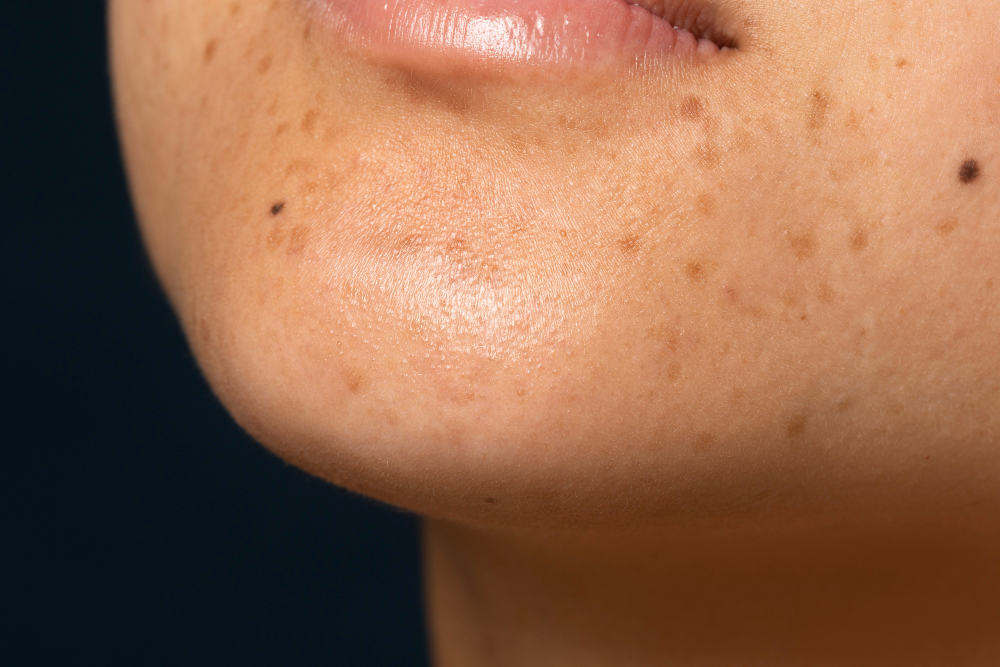
Melasma, also known as chloasma, is one of the skin discolorations that can be classified among the most common cosmetic problems. The patches on the face during melasma are irregular, yet well-defined and usually appear on the forehead, cheeks, or around the lips. Its causes are attributed to hormonal imbalances, genetics, and light exposure. The treatment process for melasma is long-term, requiring patience and consistency. How can one effectively eliminate discolorations?
Melasma – what exactly is it?
Melasma is a skin change caused by excessive sun exposure. Melanocytes, cells responsible for synthesizing melanin (the skin pigment), are present in the skin. They determine our skin tone and, when exposed to sunlight, provide protection against harmful UV rays. This protection manifests as a tan, which is a darker shade of the natural skin tone. Sometimes, however, there is localized overproduction of melanin and uneven distribution. One of the key factors that promote uneven melanin overproduction are hormonal disturbances linked to higher levels of female sex hormones. This occurs during pregnancy, menopause, or when using oral contraceptives. For this reason, melasma mainly affects women of reproductive age. Melasma is quite rare in men.
What does melasma look like? This pigmented change appears as spots with irregular shapes, ranging in color from light brown to dark brown. Melasma appears on exposed skin areas subjected to sunlight. It is often seen on hands and face, and occasionally on the legs.
Melasma – how can you get rid of discoloration?
If you wonder how to remove dark skin discolorations, you should keep in mind that the treatment process for melasma is time-consuming, requiring patience and regularity. Besides special creams for discolorations and other products to be included in daily skincare, professional treatments can be very effective. Prevention is also important – remember to use a sunscreen, especially if cases of melasma have appeared in your family.
What cosmetics should you use if you have dark spots on your face? Daily skincare should include a lightening cream that targets discolorations, containing vitamin C to inhibit melanin production or vitamin A and its derivatives. It is also beneficial to use acids such as glycolic, kojic, azelaic, or tranexamic acid, which will lighten the discoloration and prevent melanocyte activation.
During melasma treatment, appropriate procedures are also recommended. Their frequency and type should be determined individually with a specialist, depending on the depth, size, and cause of the skin changes. Chemical peels are noteworthy—they are non-invasive but effective against melasma. The acids used in peels acidify the environment and inhibit melanin secretion. The best results are achieved by combining them with depigmenting products. Other treatments, such as dermabrasion and microdermabrasion, may also be considered.
Laser therapy is also an effective method to remove discolorations. Frequently used lasers include those whose radiation is selectively absorbed by melanin, as well as picosecond lasers. These use ultrashort pulses to break down the pigment into small particles, which are then eliminated by the body. This type of pulse does not damage surrounding tissues and is safe for the skin. An additional advantage is stimulating fibroblasts to produce collagen.
See more:
BEAUTY SKIN NORBLINA FACTORY
tel. 22 150 20 40
Opening hours:
Monday – Saturday: 8:00 AM – 8:00 PM
Sunday: 10:00 AM – 7:00 PM
BEAUTY SKIN ELEKTROWNIA POWIŚLE
tel. 22 20 40 100
Opening hours:
Monday – Saturday: 8:00 AM – 8:00 PM
Sunday: 10:00 AM – 7:00 PM
BEAUTY SKIN ŻOLIBORZ
tel. 22 400 66 77
Opening hours:
Monday – Friday: 8:00 AM – 8:00 PM
Saturday: 8:00 AM – 7:00 PM
We will call back!
