


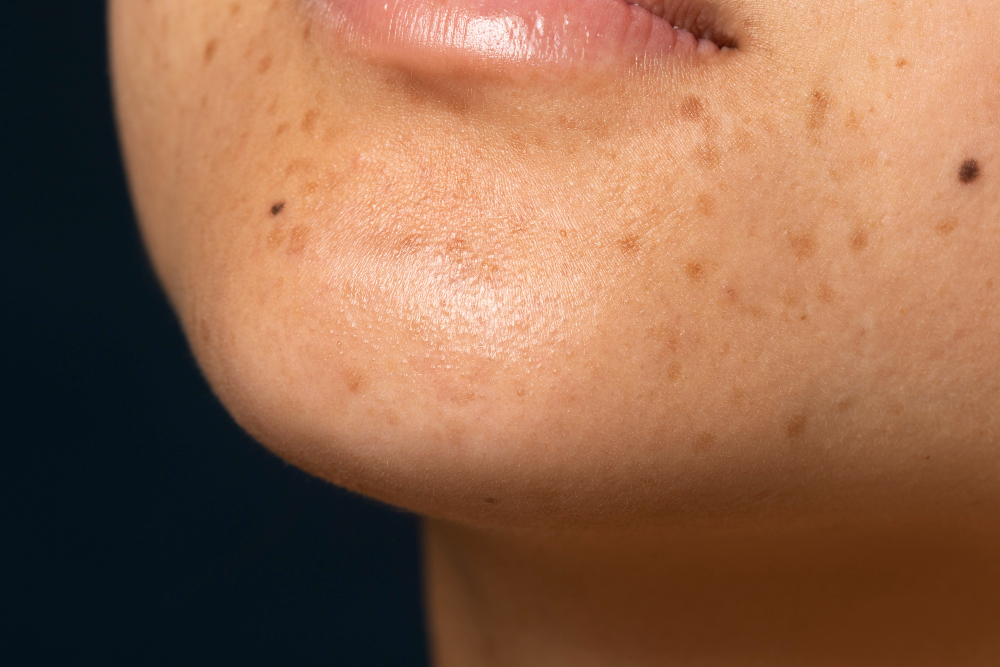
Melasma, otherwise known as osteoma, is one of the hyperpigmentations that appear on the skin, which is among the most common cosmetic problems. The facial patches in melasma are not regular, but nevertheless well demarcated and usually occupy the forehead, cheeks or around the mouth. The causes of their appearance are attributed to the endocrine system, genetics, as well as light. On the other hand, the process of treating osteoma is long, so it requires patience and regularity. How can you get rid of hyperpigmentation in an effective way?
Melasma – what exactly is it?
Melasma is a skin lesion resulting from overexposure to the sun. Melanocytes are present in the skin, whose job is to synthesize melanin (skin pigment). They are responsible for the shade of our complexion, while in the case of exposure to the sun they provide protection from the harmful effects of UV rays. This protection comes down to the presence of a tan, that is, a darker than natural skin tone. Sometimes, however, there is a local overproduction of melanin, as well as its uneven distribution. One of the most important factors that promote uneven melanin overproduction is endocrine disruption having to do with higher concentrations of female sex hormones. This occurs during pregnancy, menopause or when using oral contraceptives. It is for this reason that virtually only women of childbearing age are at risk of developing melasma. Melasma in men is quite rare.
What exactly does melasma look like? This pigmented lesion takes the form of spots that are irregular in shape, taking on a light to dark brown color. Melasma occurs on exposed parts of the skin exposed to sunlight. It is not uncommon to see melasma on the hands and face, and sometimes it also appears on the legs.
Melasma – how can you get rid of hyperpigmentation?
If we are wondering how we can get rid of dark discoloration on the skin, we must first of all keep in mind that the process of treating melasma is time-consuming, so it requires patience, but also regularity. In addition to special creams for hyperpigmentation and other products that should be included in daily care, it is worthwhile to undergo professional treatments. Prevention is also important – so don’t forget to use sunscreen, even more so when there have been cases of chloasma in our family.
What cosmetics should you use if you have dark spots on your face? It will be a good idea to include in your daily care a cream that lightens any discoloration, so one that contains either vitamin C, which is responsible for reducing melanin production, or vitamin A and its derivatives. It is also worth reaching for acids – glycolic, kojic, azelaic, or tranexamic acid, which will not only lighten hyperpigmentation, but also prevent the activation of melanocytes.
When treating osteoma, it is also a good idea to reach for appropriate treatments. Their frequency and type will be best determined individually with a specialist, as it depends on the depth, size, as well as the cause of the lesions. Noteworthy are chemical peels, which are not classified as invasive, but are nevertheless effective in the fight against osteoporosis. The acids used in them are supposed to acidify the environment and inhibit the secretion of melanin. The best results come from combining them with decolorizing products. You should also think about undergoing other treatments, such as dermabrasion and microdermabrasion.
Laser therapy will also be an effective way to remove hyperpigmentation. It is not uncommon to use lasers whose radiation is absorbed selectively by melanin, as well as picosecond lasers, among others. It uses ultra-short pulses that break down the dye into small particles, later eliminated by our body. This type of pulses will not damage the tissue at the same time and will be safe for the skin. An additional benefit is that it stimulates fibroblasts to produce collagen.
See more: